

7/14/2022
Is your Company in our Directory?

The evolution of the role of sales automation.

9/10/2026
Sales automation is revolutionising businesses’ selling process. Companies can resolve repetitive tasks by using technology to organise information, communicate with prospects, and track customer interactions instead of manual involvement. The objective is not to take people out of sales, but to provide employees more time to engage in conversations that demand judgement, creativity, and personal care. The key steps of a modern sales process can be numerous and fairly minute. Sales representatives might have to input customer information that they need to send follow-up messages, establish meetings, fill and review records, and review previous messages. Unless these tasks are accomplished through automation, key strengths and capabilities may be missed. Automation can handle repetitive tasks and ensure the sales team knows which tasks require attention.
Improving Customer Relationships
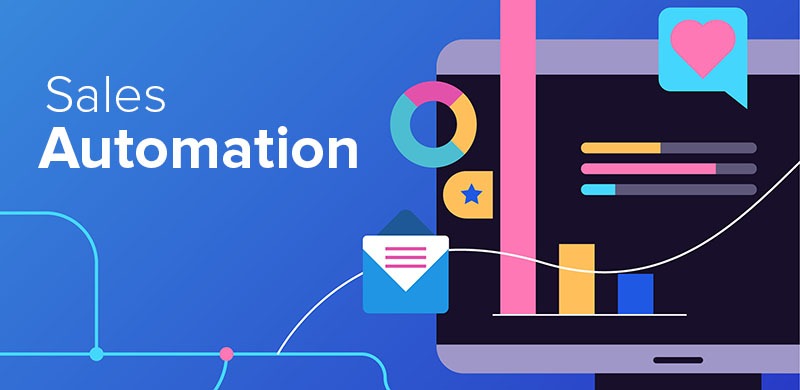 One of the top benefits of automation is predictability. You might see a potential customer today who's going to be ready to check out several days later. Automated reminders and follow-up sequences bring businesses closer to the user and remove the need to rely on memory. This can help reduce a hassle customer experience, while keeping the staff focused on the prospective customers who are most likely to call for immediate assistance. For instance, a business might automatically assign leads based on their hobbies, past engagement, or position in the purchasing lifecycle. Therefore, messages can be conveyed when it suits the need, as opposed to repeating the same message to all. It can be beneficial for businesses to harmonise these activities using RakanSales AI Sales Automation, when implemented wisely and for the right reason, allowing sales teams to gain a better view of their customer pipeline.
Automation can also help facilitate communication in various channels. Different customers may connect with a business via e-mail, social media, chat, or website. This organised system allows salespeople to easily comprehend the entire customer's buying process. They do not have to try to find information spread across various platforms; rather, they can work with structured and easily accessed information.
Supporting Better Decisions
There is data that may be useful for understanding what's happening through the sales process, and Sales automation can give you that data. Managers can review incoming leads, identify where leads are dropping off, and discover activities that are attracting more interest. This means that this information can be used to make real decisions, instead of estimates. But don't view automation as the alternative to relationships with people. Reliable dialogue, personal stories and tailor-made advice continue to be important to customers. Automation can have the opposite impact and can be detrimental to trust when every interaction feels robotic. It is, therefore, essential for the business to find a balance here, between efficiency and personal communication.
There could be a future where there is more intelligent technology working in tandem with people in the sales organisation. Automation can take on repetitive tasks, process huge volumes of information, and discover beneficial patterns while a sales representative can devote their time to build connections and address consumer considerations. In the end, sales automation is the most impactful when it has a goal. It should streamline convoluted processes, save staff time from doing unnecessary tasks, and find a way to have them spend more time being productive. With strategic use, companies can make the most of their selling process, making it more organised and offering a more streamlined and uniform customer experience.
Other articles and publications:
The role of professional roofers in the construction of modern homes is quite obvious. When it comes to the construction of modern homes, strong roofs cannot be overlooked.

Speaking of the social media era, we are exactly living in the climax of social media, and in that regard, the role of Instagram cannot be put on a back burner.
7/16/2023

In the dynamic landscape of real estate and finance, the role of mortgage brokers emerges as a linchpin in the journey to homeownership.
8/13/2023

There is a big difference when you give a gift by choosing it randomly, and on the other hand, when you want to give a special golf gift by shopping it from Rhoback.
2/18/2022

In this day & age, no business can grow and go in the upward direction unless it can communicate with its potential and existing clients. In that regard, the role of Facebook is quite obvious.
1/13/2023

In this regard, door clearance is the key factor! The main reason is the doors play the role of an entrance for disabled employees, so door clearance cannot be overlooked.
1/14/2023
Business details
- +1 (21220) 086-0
- 7766 Indian Summer Rd. Webster, NY 14580
We are a home and electronic business that sell in our store and online
New York
company, product and service directory
company, product and service directory
Business Network 2008-2026
All rights reserved
All rights reserved